
Skill Shift: The Rapid Evolution of Skills
Reading time: 5 min
How long will your skills remain relevant? It’s a question we all have to grapple with. According to a study by the McKinsey Global Institute, new technologies such as AI could automate about 30% of working hours by 2030. That’s why it’s essential to prepare your employees for the skill shift and help them develop the skills needed to meet these new demands. But how can this transformation be achieved? How is the role of a leader changing? And can artificial intelligence actually be helpful when it comes to skills strategies? Team Lead for HXM Transformation, Felix Ehrenfels, answers all these questions in this interview.
What is the “skill shift,” and what trends are driving it?
The skill shift is nothing new; rather, it is a recurring pattern. Over the past decades and eras, we have seen time and again that skills change.

What is interesting, however, is that the skill shift is accelerating at an ever-faster pace. The main reasons for this are digitalization and artificial intelligence.
How can you tell when a skill shift is happening?
Roles and responsibilities are changing rapidly. Take textile production, for example: Before industrialization, this industry was heavily craft-based. Spinners and weavers needed a great deal of manual dexterity, experience, and knowledge of the processes. A skilled weaver mastered the loom, knew the materials, and could directly influence quality through their own work. With machines like the spinning jenny, mechanical looms, and later steam-powered factories, this changed abruptly. Suddenly, entirely different skills were in demand—a shift away from manual craftsmanship toward machine operation. We are experiencing exactly this same upheaval again today, only across many more industries simultaneously.
What trends related to skills are you currently observing that hardly anyone is talking about yet?
Everyone is talking about “skills” these days—sometimes in very general terms, especially when distinguishing them from competencies. But in addition to a skillset, mindset and toolset are also important components for performing well in one’s role. When we think of the most successful employees, they certainly possess extraordinary skills, but it is only through their mindset and toolset that they can effectively put those skills to use.
How is the “skill shift” changing the role of leaders?
The skill shift has two distinct effects: First, your own role as a leader may change; second, the roles—and the associated skills and responsibilities—of your employees will change. It is essential to guide your own employees early on as they transition into new roles, to empower and support them, and to lead by example.
What are the most common reasons why skill-based strategies fail in practice?
Too much, too big, and all at once. We all want quick results at the snap of a finger. But real transformation takes time, testing, and feedback. It’s better to start small and make successes quickly measurable, rather than forcing a 100-percent solution right away. Skills serve as the link to modern work, whether in staffing or in using new tools. That’s why they must be continuously developed, because a skills-based organization is a dynamic entity.
Why do companies prefer to invest in recruiting rather than in building internal capabilities?
In short: It’s easier! We’re coming off years of economic strength, during which the response to gaps or needs was usually, “We’ll just hire someone to fill the position.” As a result, we’ve accumulated a great deal of experience in recruitment, while reskilling and upskilling did take place but were used in a much less targeted manner. Don’t get me wrong: employee development has also been a high priority in recent years. However, the focus was usually on development within one’s own role (and the associated skills) or was geared toward a new role that already existed.
Which three measures have the greatest impact?
If a company starts from scratch today, its very first step must be to establish a well-defined job and skills architecture.
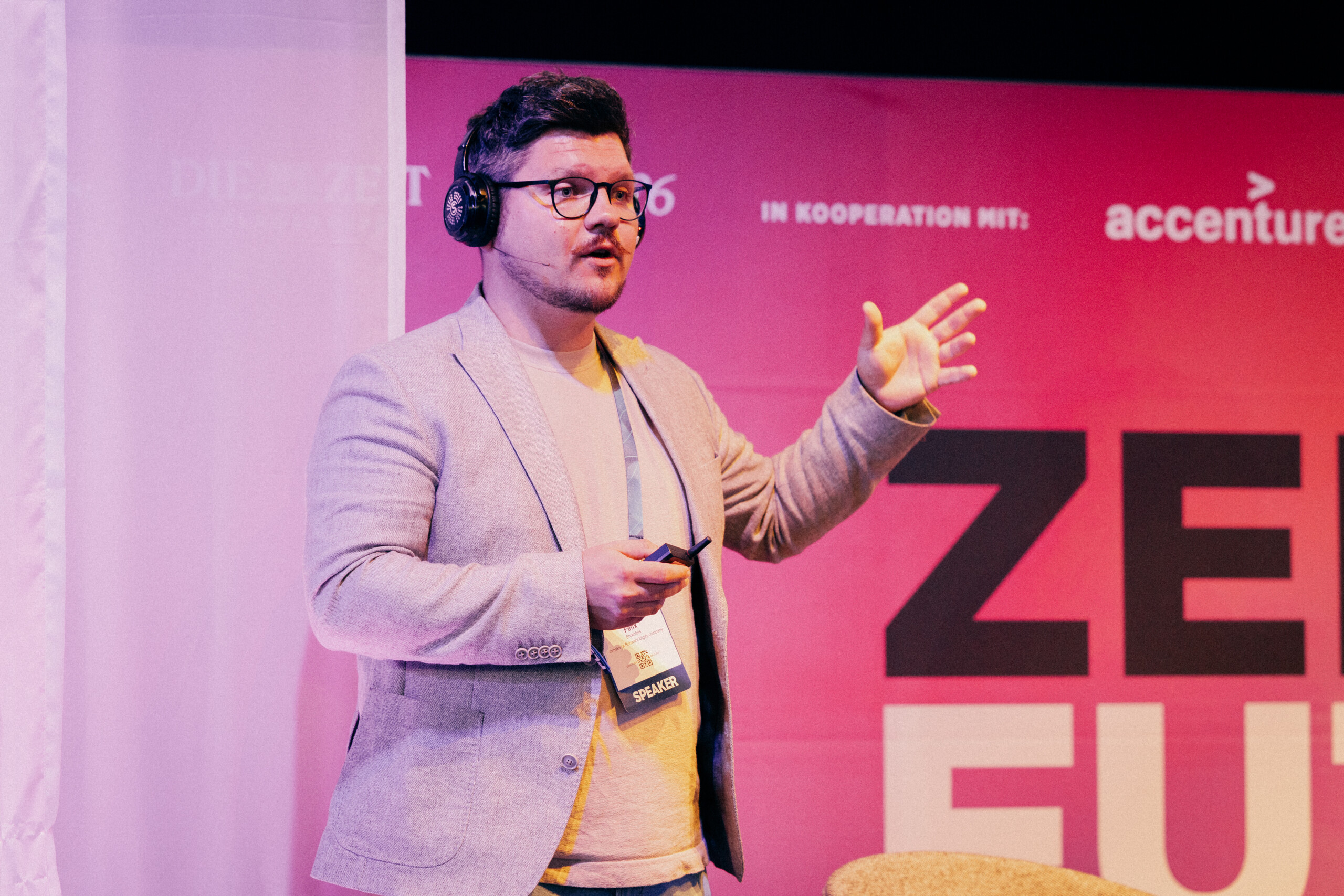
Once this foundation is in place, three measures in particular have the greatest impact on value creation: One of these is embedding skills into everyday talent management processes—that is, aligning recruiting, upskilling, reskilling, and succession planning with specific skills. This is where the benefits for employees and managers first become tangibly apparent in their day-to-day work.
The second, even more powerful lever lies in skill-driven workforce planning and transformation. By using skill data to anticipate future competency gaps, companies can proactively manage change.
Ultimately, the greatest leverage of all is unleashed by the shift toward a truly skill-based organization—that is the ultimate challenge. Tasks and projects are no longer rigidly tied to traditional job descriptions but are dynamically matched to people’s actual skills. This creates maximum agility and has the greatest impact not only on individual talent but also on the organization as a whole.

How exactly can AI help companies with the skill shift?
Many AI models, especially LLMs, are easily accessible and already quite advanced. This means you can ask almost any generative AI, “What skills should role X have?” and generally get good results.
However, there are two important caveats to keep in mind: First, AI is essentially an algorithm. It calculates the probabilities of an output and thus primarily generates results based on existing data. Therefore, predictions about the future over the next five to ten years are usually speculative, and the data available to support them is insufficient. To be fair, no one knows exactly what the future holds—so how could AI possibly know? It’s more like looking into a crystal ball and, therefore, educated guessing.
On the other hand, you should provide the AI with a fixed taxonomy through grounding. Otherwise, the same skill could be output differently depending on the role. Then, in one place it might be “project management,” in the next “Project Management,” and in the third “Scrum.”
How will companies talk about skills in five years?
That, too, is just a guess. But I very much hope that the importance of skills will be completely different by then. Right now, many companies are still hesitant because of the perceived costs and effort involved. But those who get started now will have an unassailable lead in five years. I’d like to see a shift in mindset from “Everyone’s talking about it, but do we really need it?” to “We need a skills strategy, even if we haven’t fully implemented it yet.”
